Things I build outside of work.

01 · Quant

Signals, simulations and trading.

Research project · Experiment in progress

Jev versus traditional classifiers

Can a hosted text classifier pick what to hold better than trees, trend rules or simply holding everything?

Jev is TypeSafe's hosted model that answers multiple-choice questions about a piece of text. I gave it the same 27 price and volume readings as three classifiers and two trend rules, with no ticker, date or price level, then traded every model's BUY, HOLD and SELL calls by one rule across 15 assets.

Net Sharpe ratio, 5-day holdingtop 4 of 15 assets · 2014-10 to 2024-09 · after costs
  1. Equal-weight buy and hold0.52
  2. Random forest0.40
  3. Momentum rule0.29
  4. Gradient-boosted trees + Jev0.26
  5. Gradient-boosted trees0.25
  6. Moving-average rule0.25
  7. Random selection0.21
  8. Jev alone0.11
  9. Trees on Jev's outputs0.06
  10. Logistic regression−0.15

Buy and holdUses JevTraditional models and rulesNo skill

0 of 8strategies beat equal-weight buy and hold
0.11net Sharpe for Jev alone; picking at random got 0.21
+0.00change in Sharpe on the main test from adding Jev's outputs to the trees
50,940asset-days scored by Jev, for $5.76
  • Jev alone did not rank assets. Its picks earned a net Sharpe of 0.11, under the 0.21 of a random pick and reliably below buy and hold (−0.41, 95% interval −0.72 to −0.14).
  • Adding Jev to a classifier changed nothing. Gradient-boosted trees scored 0.25 on the 27 readings and 0.26 with Jev's outputs added (difference 0.00, interval −0.17 to +0.16). In most other views the change is slightly negative, and never reliably different from zero.
  • Nothing beat holding everything. The best strategy, a random forest, reached 0.40 against 0.52. This run would usually miss a true difference smaller than about 0.43.

Not a verdict yet: these are the first ten yearly folds with zero-shot Jev, and the final two years stay locked for the verdict run. The asset list was chosen with hindsight. Every table is in the run report. Research, not investment advice.
02 · Data engineering

Pipelines, models and the plumbing behind them.

Research project · Benchmark study

Accelerating Tabular Reconciliation

Ten ways to compare two huge tables, measured on time, memory, CPU and code.

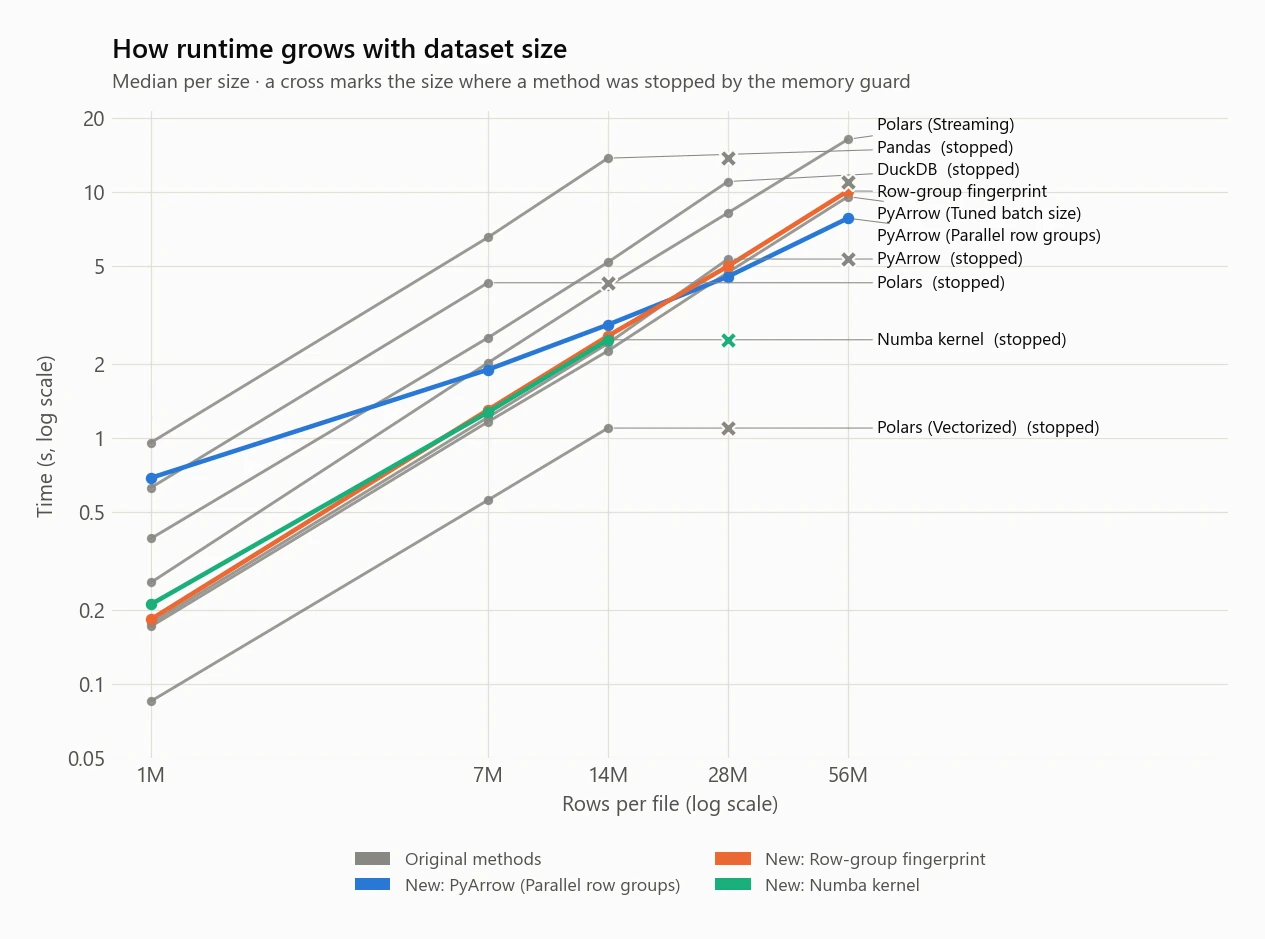
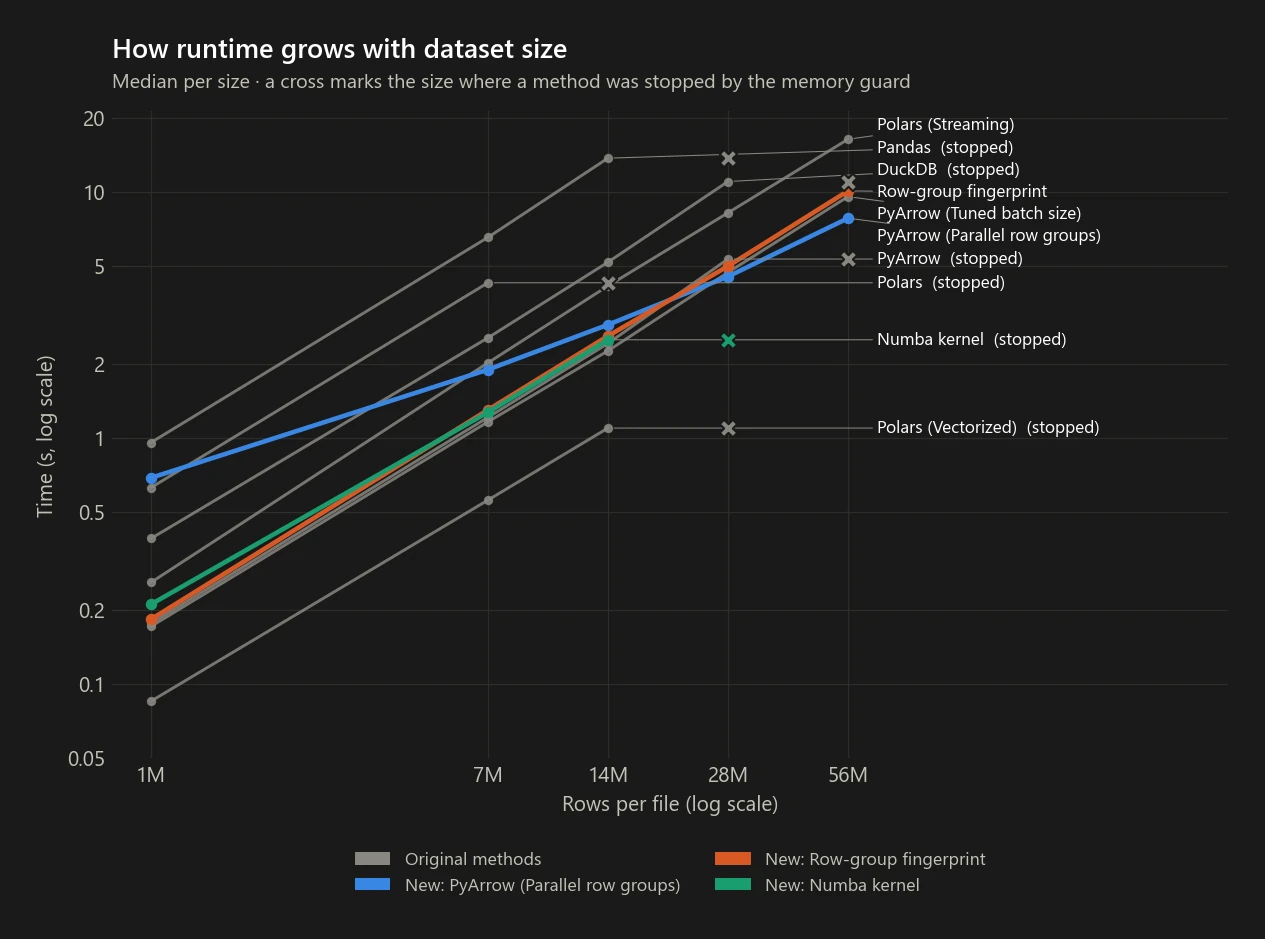
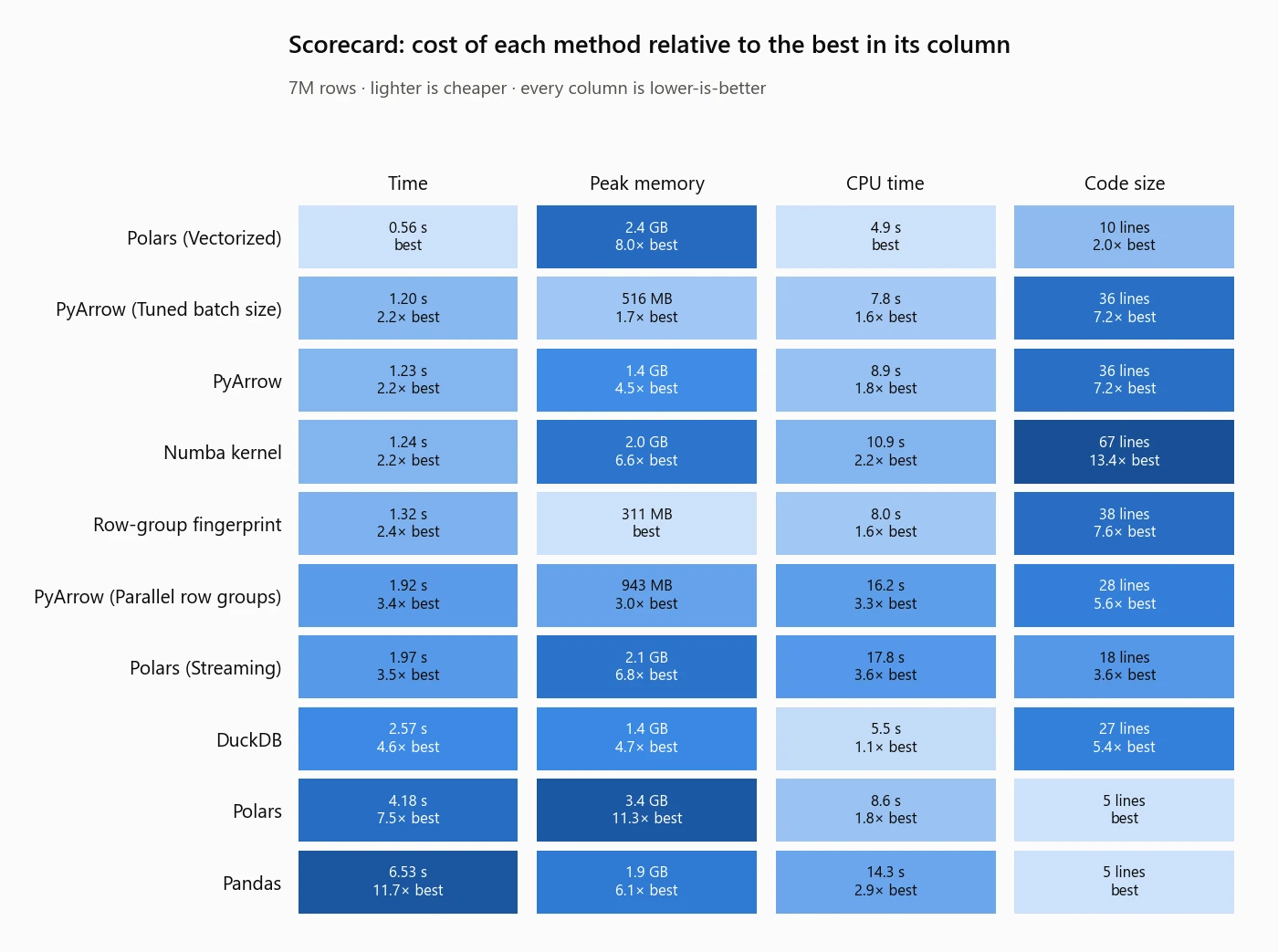
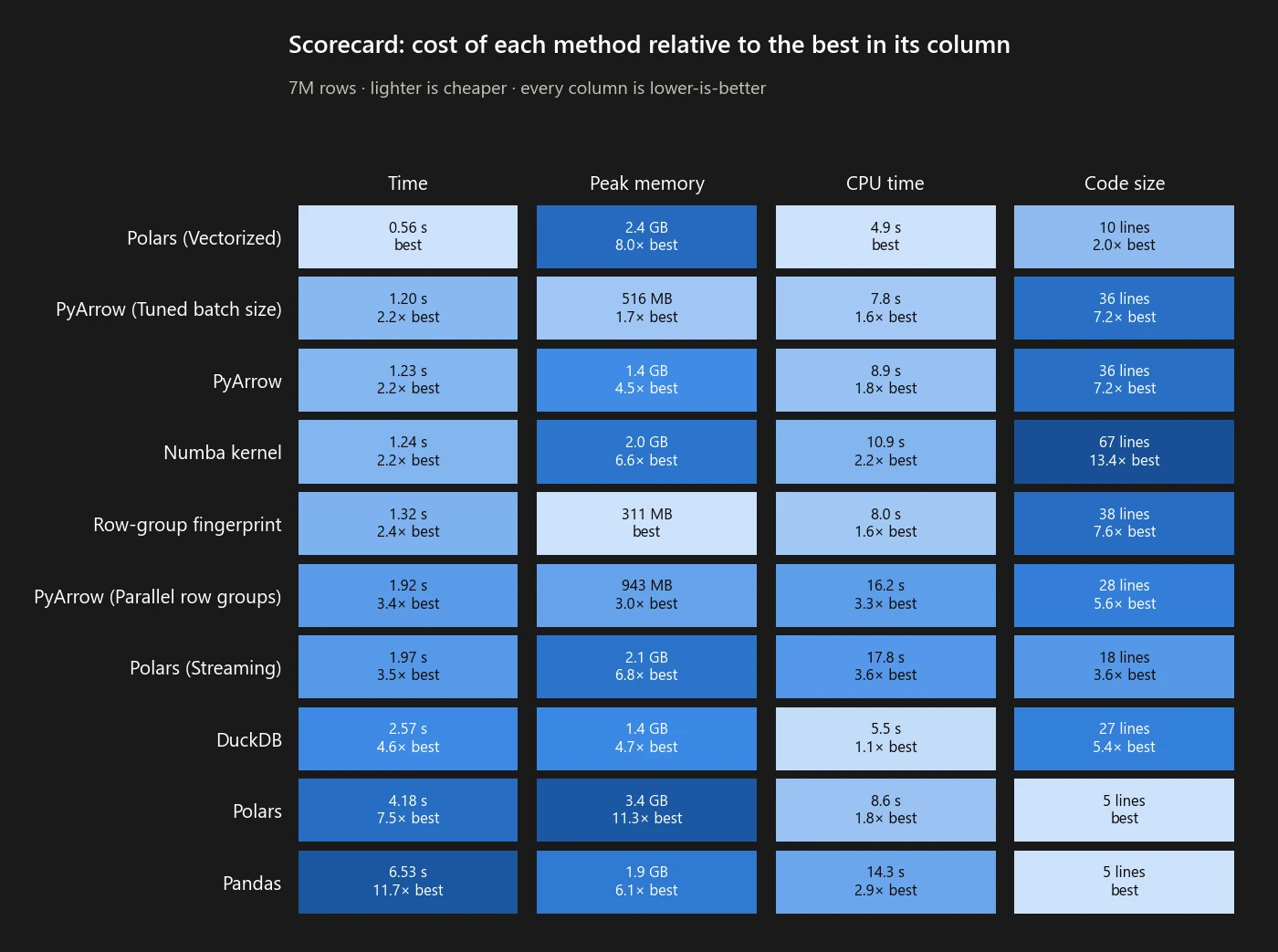
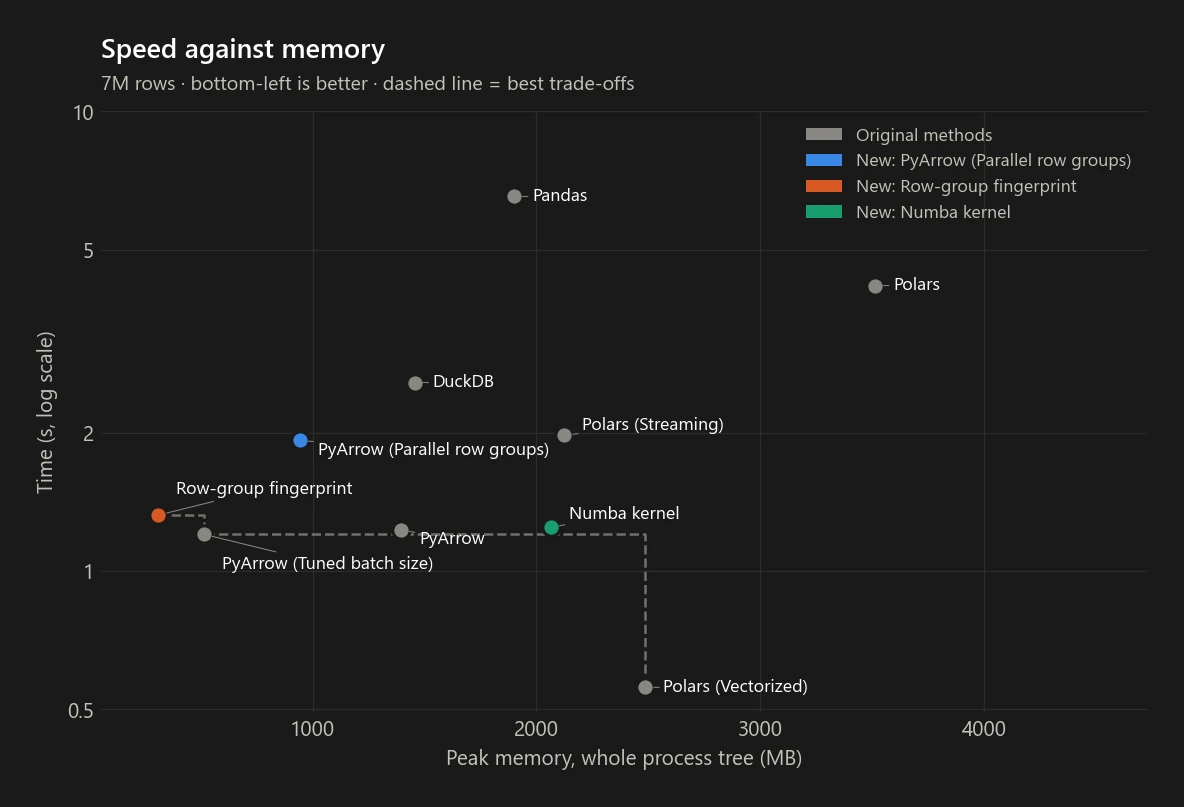
Which way of reconciling two large tables is fastest, and what does it cost? I benchmarked ten methods on 7M-row Parquet files, scaled to 56M, and checked every answer against ground truth.

Time to reconcile 7M rowsmedian of 7 runs · hover or tap a row
  1. Polars (Vectorized)0.56 s
  2. PyArrow (Tuned batch size)1.20 s
  3. PyArrow1.23 s
  4. Numba kernel1.24 s
  5. Row-group fingerprint1.32 s
  6. PyArrow (Parallel row groups)1.92 s
  7. Polars (Streaming)1.97 s
  8. DuckDB2.57 s
  9. Polars4.18 s
  10. Pandas6.53 s

Original methodsNew in this study

12×fastest to slowest of the ten methods
11×spread in peak memory, 311 MB to 3.4 GB
4 of 10methods still finish at 56M rows
68 msto confirm two identical 7M-row files
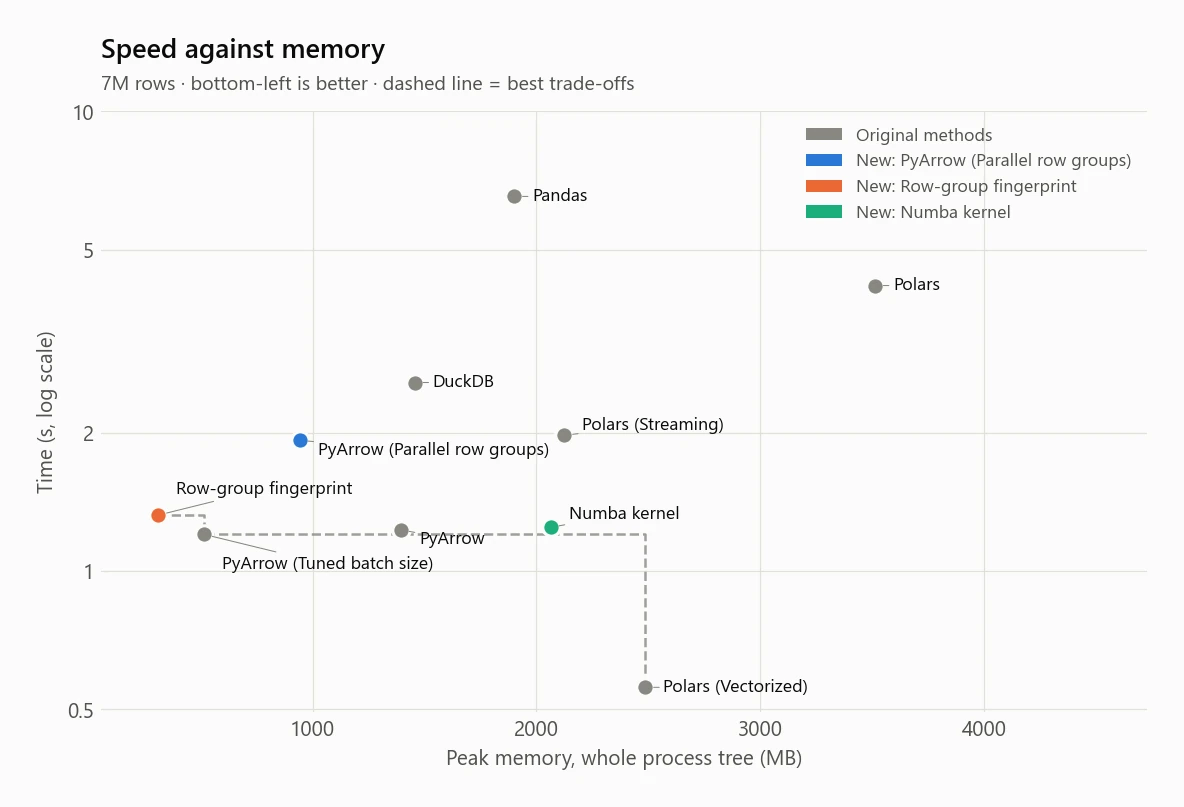
  • Fastest is not the cheapest. Polars (Vectorized) took 0.56 s but peaked at 2.4 GB. Tuned PyArrow took 1.2 s with 4.8× less memory.
  • Memory decides what scales. At 56M rows only four methods finish, and the winner changes.
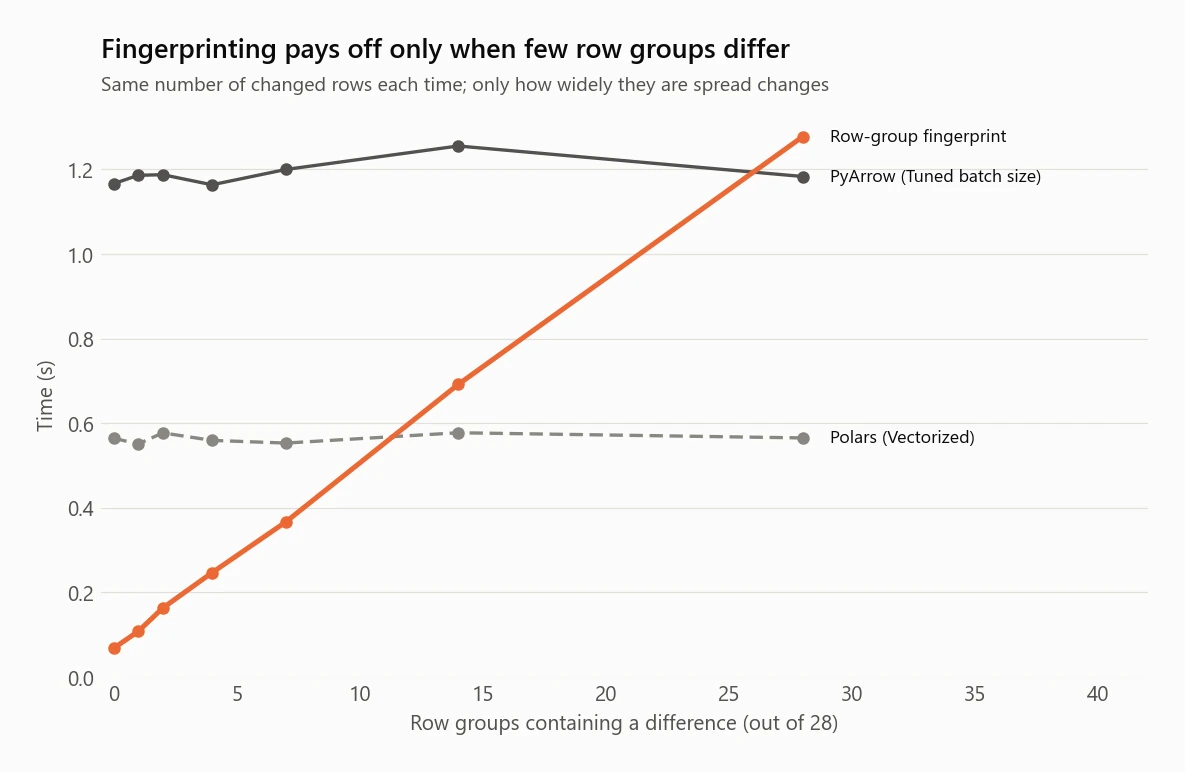
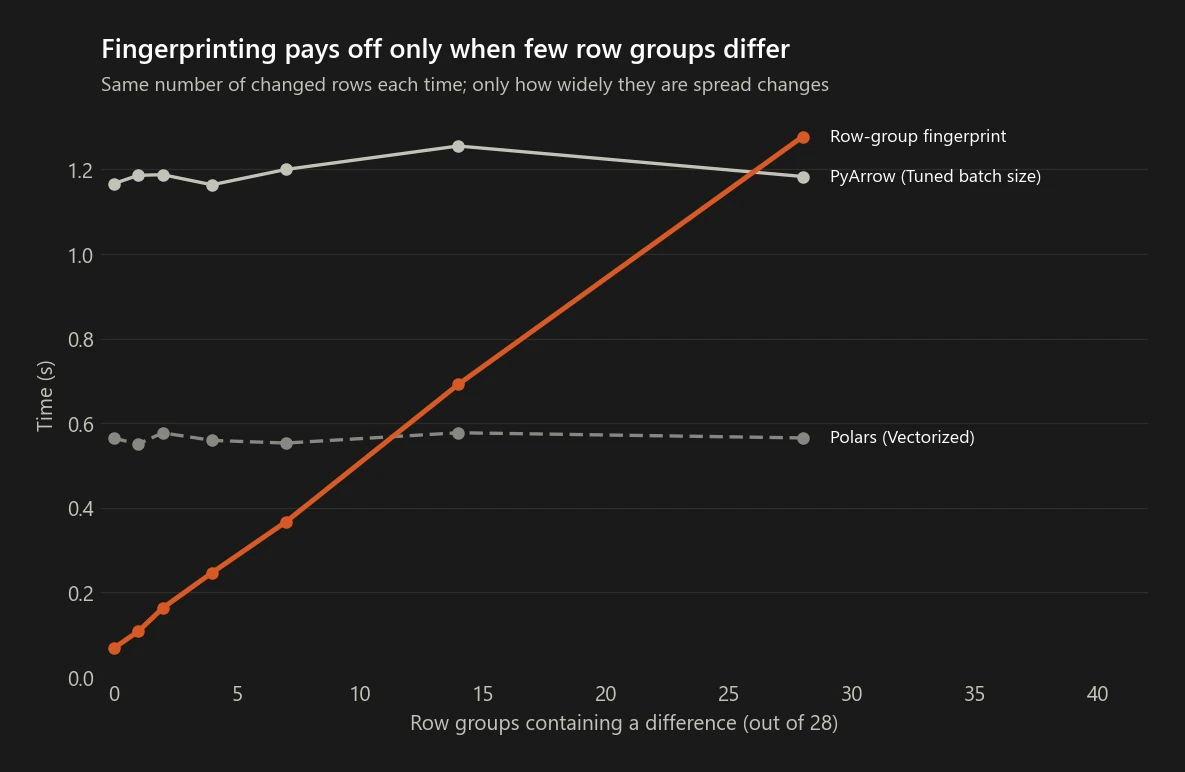
  • Skipping beats speeding up. Comparing raw Parquet row-group bytes is near-instant on mostly unchanged files, and gains nothing once every group differs.

Synthetic data, one machine. Section 8 of the report covers the limitations.

View visualisations 4 figures

03 · Games

Games, built for fun.

Personal project · Game

Beat Beat City

A neon-lit rhythm game I built in my spare time. It's a private demo for now, for Windows and macOS.

Email me for demo
linkcable.app with Pokémon Polished Crystal, FireRed, Radical Red, Emerald and Platinum

Personal project · Web app

Link Cable

Classic Pokémon games, played together in the browser. Up to 8 players walk, trade and link battle in real time. Free, bring your own ROM.

TypeScript · WebAssembly · Cloudflare Workers

04 · Utilities

Small tools that scratch an itch.

Open project · Looking for feedback & collaborators

Claude Switcher

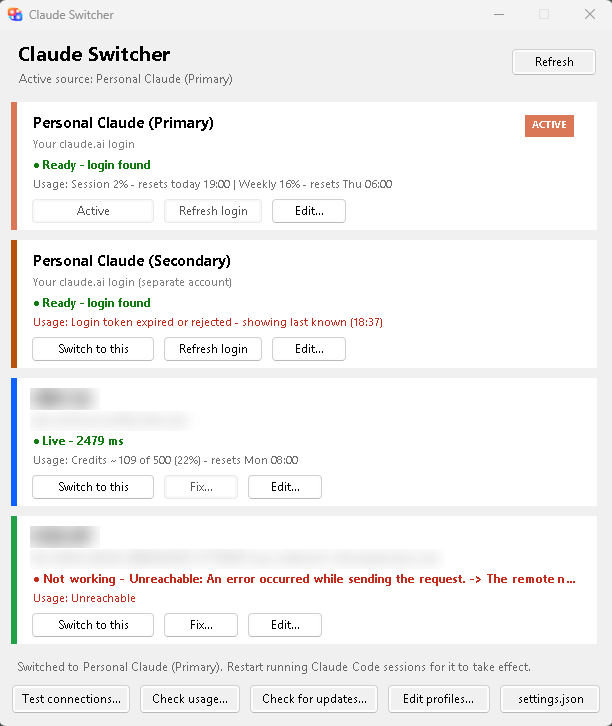
A lightweight tool for switching between Claude accounts and API connectors. It switches Claude Code between your claude.ai logins and LLM gateways without hand-editing settings.json.

I'm actively looking for feedback and collaborators. If you use Claude across several accounts or connectors, I'd like to hear what would make this more useful, and I'm open to contributions.

Windows tray app · PowerShell · Mac version not yet available

View on GitHub ↗  ·  Get in touch

The Claude Switcher window: one card per source, each showing live status and usage, with Switch, Refresh and Edit buttons.

Contact

Want to talk about any of these?

Email is fastest.

Download my CV

A quick check that you're human, then the PDF downloads.